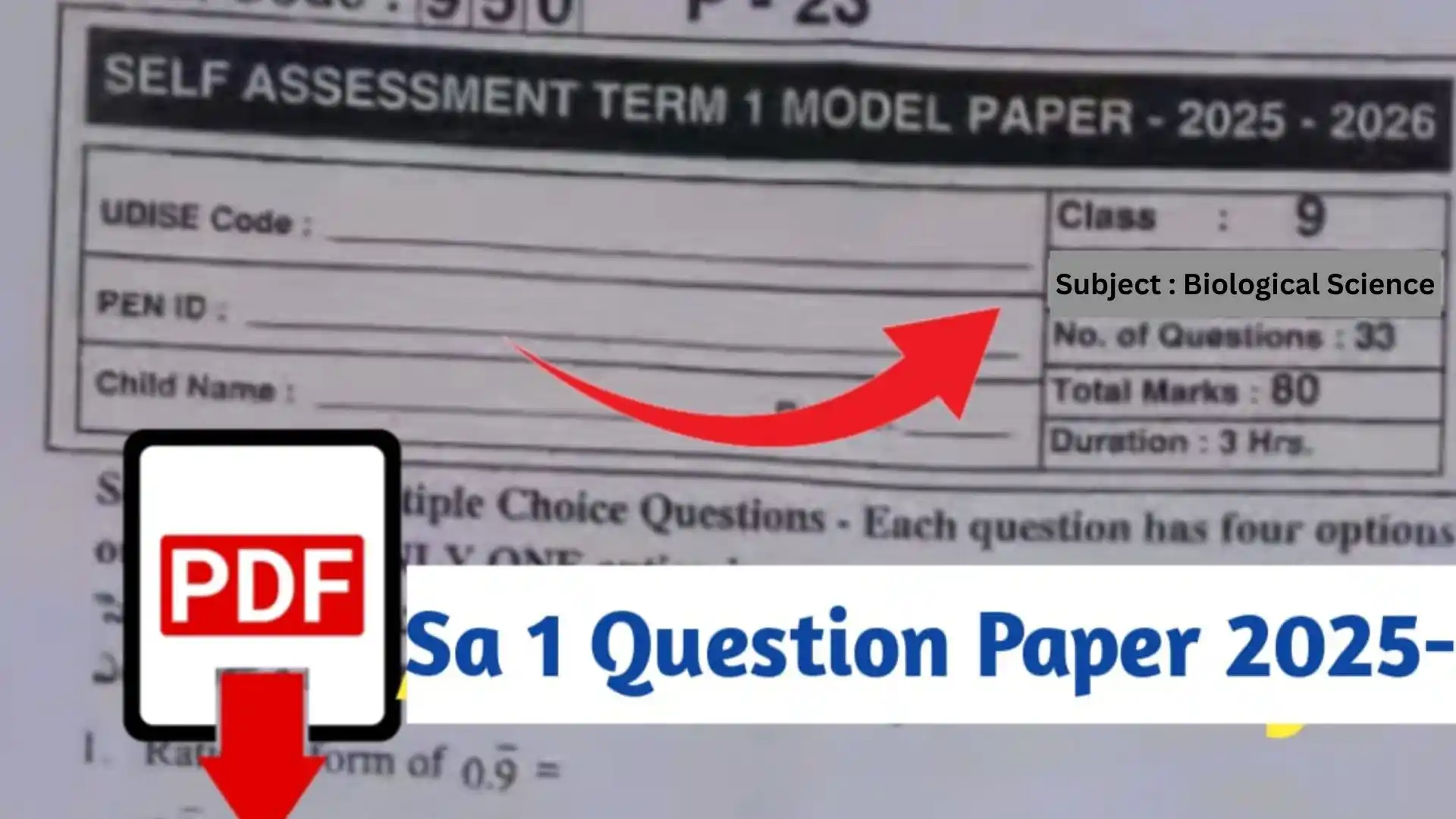


SELF ASSESSMENT TERM–1 MODEL PAPER – 2025-2026
Exam Code :
MR –
UDISE Code :
PEN ID :
Child Name :
Roll No :
Class : 9 Subject : Biological Science
No. of Questions : 33
Total Marks : 80
Duration : 3 Hrs
**SECTION – A
Multiple Choice Questions**
(Each question has four options, only one is correct)
20 × 1 = 20 Marks
1. “Cell is the structural and functional unit of life” – who proposed this idea?
“కణం జీవుల నిర్మాణ, కార్యాల మూలభూతం” అని ఎవరు చెప్పారు?
A) Watson & Crick
B) Schleiden & Schwann
C) Robert Hooke
D) Leeuwenhoek
[ ]
2. Which tissue transports water in plants?
మొక్కల్లో నీటిని తరలించే కణజాలం ఏది?
A) Phloem
B) Xylem
C) Parenchyma
D) Collenchyma
[ ]
3. Which one is an example of prokaryote?
ప్రోకారియోటు జీవికి ఉదాహరణ ఏది?
A) Amoeba
B) Yeast
C) Bacteria
D) Paramecium
[ ]
4. The process of breakdown of glucose to release energy is:
గ్లూకోజు విచ్ఛిన్నం చెంది శక్తి ఉత్పత్తి అయ్యే ప్రక్రియ ఏది?
A) Respiration
B) Transpiration
C) Digestion
D) Excretion
[ ]
5. Balloon–like structures in lungs are called:
ఉపిరితిత్తుల్లో గుబ్బలవంటి నిర్మాణాలు ఏమని పిలుస్తారు?
A) Nephrons
B) Alveoli
C) Bronchi
D) Capillaries
[ ]
6. Which of the following is NOT a plant hormone?
క్రింది వాటిలో మొక్కల హార్మోన్ కానిది ఏది?
A) Auxin
B) Cytokinin
C) Insulin
D) Gibberellin
[ ]
7. The food–producing tissue in plants is:
మొక్కల్లో ఆహారం తయారుచేసే కణజాలం ఏది?
A) Xylem
B) Phloem
C) Meristem
D) Chlorenchyma
[ ]
8. The kidney filters blood through microscopic units called:
రక్తం శుధ్ధి చేసే మూత్రపిండాల సూక్ష్మ భాగాలు ఏమిటి?
A) Alveoli
B) Axons
C) Nephrons
D) Platelets
[ ]
9. Malaria is caused by:
మలేరియా వ్యాధి కలిగించేది ఏది?
A) Virus
B) Fungus
C) Protozoa
D) Bacteria
[ ]
10. Which disease spreads through contaminated water?
కాలుష్యమైన నీటితో వ్యాప్తి చెందే వ్యాధి ఏది?
A) Tuberculosis
B) Cholera
C) Rabies
D) AIDS
[ ]
11. The basic unit of nervous system is:
నర వ్యవస్థ యొక్క ప్రాథమిక భాగం ఏది?
A) Axon
B) Neuron
C) Nerve
D) Dendrite
[ ]
12. Which process helps plants lose excess water?
మొక్కలు అధిక నీటిని కోల్పోయే ప్రక్రియ ఏది?
A) Respiration
B) Germination
C) Transpiration
D) Photosynthesis
[ ]
13. The part of brain that controls heartbeat and breathing:
హృదయ స్పందన, శ్వాసలను నియంత్రించే మెదడు భాగం ఏది?
A) Cerebrum
B) Cerebellum
C) Medulla
D) Pons
[ ]
14. The green pigment in plants is:
మొక్కలలోని ఆకుపచ్చ వర్ణకం ఏది?
A) Melanin
B) Haemoglobin
C) Chlorophyll
D) Carotene
[ ]
15. Root hairs help in:
రూట్ హెయిర్స్ సహాయపడేది ఏ విభాగంలో?
A) Photosynthesis
B) Water absorption
C) Reproduction
D) Respiration
[ ]
16. The term “pathogen” refers to:
“పాథోజెన్” అనే పదం అర్ధం ఏమిటి?
A) Nutrient
B) Disease–causing organism
C) Cell organelle
D) Hormone
[ ]
17. Which blood component carries oxygen?
ఆక్సిజన్ను మోసుకెళ్లేది ఏది?
A) WBC
B) Platelets
C) Plasma
D) RBC
[ ]
18. Bending of plant stem towards light is:
వెలుతురు వైపు మొక్క వంగడాన్ని ఏమంటారు?
A) Hydrotropism
B) Phototropism
C) Geotropism
D) Thigmotropism
[ ]
19. The mode of nutrition in fungi:
శిలీంద్రాలలో ఆహరణ విధానం ఏది?
A) Autotrophic
B) Parasitic
C) Heterotrophic (saprophytic)
D) Chemosynthetic
[ ]
20. Which one is a communicable disease?
సంచార వ్యాధి ఏది?
A) Diabetes
B) Cancer
C) Measles
D) Arthritis
[ ]
SECTION – B
(Write answers in your answer booklet)
4 × 2 = 8 Marks
21. Define tissue. Give an example.
కణజాలం అంటే ఏమిటి? ఒక ఉదాహరణ ఇవ్వండి.
22. Draw the neat labelled diagram of an animal cell / జంతు కణం చిత్రం గీయండి.
23. Expand ATP. Why is it called energy currency of cell?
ATP ను విస్తరించండి. కణశక్తి ద్రవ్యం ఎందుకు అంటారు?
24. What is immunity? Name any two types.
రోగనిరోధక శక్తి అంటే ఏమిటి? రెండు రకాల పేర్లు చెప్పండి.
SECTION – C
5 × 4 = 20 Marks
25. Read the following passage and answer the questions given.
(Science comprehension – bilingual passage)
PASSAGE (ENGLISH + TELUGU)
Respiration is a vital process which releases energy from food. In plants and animals, respiration occurs in mitochondria. Oxygen helps in complete breakdown of glucose and produces carbon dioxide, water and energy.
శ్వాసక్రియ ద్వారా జీవులు ఆహారంలోని గ్లూకోజ్ను విచ్ఛిన్నం చేసి శక్తిని పొందుతాయి. ఈ ప్రక్రియ మైటోకాండ్రియాలలో జరుగుతుంది. ఆక్సిజన్ సహాయంతో పూర్తిస్థాయి శ్వాసక్రియ జరిగి కార్బన్డయాక్సైడ్, నీరు, శక్తి ఉత్పత్తి అవుతాయి.
Questions:
అ) Respiration occurs in which organelle? / శ్వాసక్రియ ఏ అవయవంలో జరుగుతుంది?
ఆ) Complete breakdown of glucose needs? / గ్లూకోజ్ పూర్తిగా విచ్ఛిన్నం కావడానికి ఏది అవసరం?
ఇ) Name two products of respiration. / శ్వాసక్రియలో వచ్చే రెండు ఉత్పత్తులు రాయండి.
ఈ) Frame one meaningful question based on passage. / పాఠ్యంపై ఆధారంగా ఒక అర్థవంతమైన ప్రశ్న ఇవ్వండి.
26. Explain the structure and functions of neuron with a neat diagram.
న్యూరాన్ నిర్మాణం, పనితీరును వివరిచి చిత్రం గీయండి.
27. Match the following:
A – Cell part
B – Function
- Nucleus – (a) Energy production
- Mitochondria – (b) Control center
- Vacuole – (c) Storage
- Ribosome – (d) Protein synthesis
Write the correct pairs. / సరైన జతలు రాయండి.
28. Give reasons:
అ) Plants do not have a nervous system. / మొక్కలకు నరవ్యవస్థ ఎందుకు ఉండదు?
ఆ) Root hairs increase surface area. / రూట్ హెయిర్స్ ఉపరితలాన్ని ఎందుకు పెంచుతాయి?
SECTION – D
4 × 8 = 32 Marks
(Internal choice available)
30. (A) Explain different types of plant tissues with diagrams.
మొక్కల కణజాలాల రకాలను వివరిచి చిత్రాలతో వివరించండి.
OR
30. (B) Describe the process of photosynthesis and factors affecting it.
ఆహారసంయోజన ప్రక్రియను, దాన్ని ప్రభావితం చేసే అంశాలను వివరించండి.
31. (A) Explain human digestive system with a neat diagram.
మనుషుల జీర్ణక్రియ వ్యవస్థను చిత్రం సహా వివరించండి.
OR
31. (B) Write an essay on balanced diet and malnutrition.
సమతుల ఆహారం, పోషకాహార లోపం గురించి వ్యాసం రాయండి.
32. (A) Describe the structure of the human heart.
మనిషి హృదయ నిర్మాణం వివరించండి.
OR
32. (B) Explain the mechanism of breathing in humans.
మనుషుల్లో శ్వాసక్రియ విధానాన్ని వివరించండి.
33. (A) Prepare TEN questions to interview a doctor/health worker about communicable diseases.
సంచార వ్యాధులపై వైద్యుడు/హెల్త్ వర్కర్కు అడిగే పది ఇంటర్వ్యూ ప్రశ్నలు తయారు చేయండి.
OR
33. (B) Write a conversation between a biology teacher and student on prevention of diseases.
వ్యాధులను నివారించుటపై ఉపాధ్యాయుడు–విద్యార్థి మధ్య సంభాషణ రాయండి.
ANSWER KEY (SECTION–A)
1-B
2-B
3-C
4-A
5-B
6-C
7-D
8-C
9-C
10-B
11-B
12-C
13-C
14-C
15-B
16-B
17-D
18-B
19-C
20-C